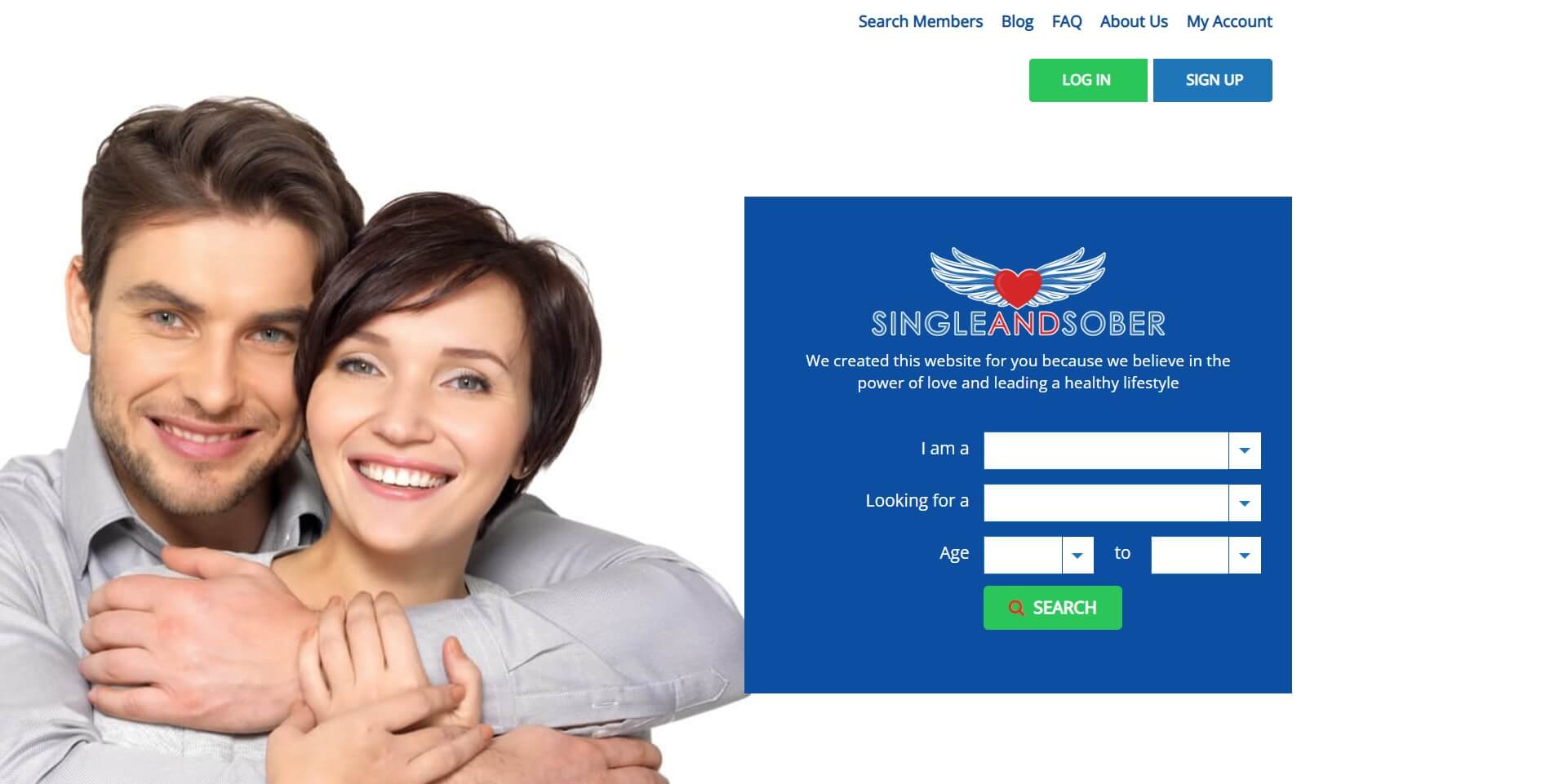
Single and Sober is a niche dating service that is only available to people who have made the decision to abstain from alcohol and drugs or who are in recovery from substance use disorders.
Since traditional social settings frequently center around drinking or other drugs, the dating platform was created to address the particular difficulties of dating when sober.
Its main objective is to create a safe and trigger-free environment so users can avoid explaining their sobriety to prospective partners.
The dating website places a strong emphasis on intentional dating, advising users who might not be ready for a relationship to prioritize their own development before looking for a partner on the site.
Mike Reed, who developed the website based on his personal experiences with the challenges of sober dating, launched the platform.
November 2016 saw the official launch of Single and Sober.
Single and Sober’s unique distribution mechanism, philosophy, and user experience set it apart from competitors.
Single and Sober has a targeted, conventional strategy, whereas many contemporary sober platforms serve as all-in-one rehabilitation apps.
Who Single and Sober Is Suited For
People who value long-term recovery and prefer a focused, relationship-focused setting over a busy social network are best suited for Single and Sober.
The platform is specifically designed for:
Relationship-Focused People: It is intended for those who are prepared to establish wholesome, loving relationships without the drama or transient nature that are frequently connected to casual swiping apps.
Established Recovery Members: It serves individuals who are already in recovery and wish to stay away from the awkward conversations and triggers that come with discussing their sobriety on popular apps.
Users Who Prefer “Intentional” Dating: The online dating site promotes a more gradual approach, even suggesting that individuals who are not emotionally prepared should prioritize their own healing.
Conventional Web Users: In contrast to mobile-only alternatives like Club Pillar or Loosid, it is still a viable choice for people who would rather browse thorough profiles via a web-based interface rather than a smartphone app.
Health-Conscious Singles: Although it has a solid recovery core, it’s also appropriate for sober-curious people who just want to go out without drinking.
Who Single and Sober Isn’t Suited For
Not all sober daters are suited for Single and Sober, which is still a specialized, relationship-focused site.
Its philosophy and structure often make it unsuitable for:
People in Very Early Recovery: The dating platform specifically suggests that people who are not yet emotionally stable in their sobriety put self-improvement ahead of relationships.
Before starting a new romantic connection, staying sober for at least a year to prevent stressors that could trigger relapse is advisable.
Casual Daters or “Swipe” Enthusiasts: It is not appropriate for people seeking the fast-paced, gamified experience of apps like Tinder or Bumble because it is a web-based website that focuses on “intentional” dating.
The relationship-centric tone of the dating platform can be restricting to those looking for casual hookups.
Users Looking for All-Inclusive Support Tools: Single and Sober is solely a dating site, in contrast to rivals like Loosid, which include social newsfeeds, crisis hotlines, and sobriety monitors.
Users who expect their dating app to serve as their main recovery support system should not use it.
Users on a Tight Budget: Although creating a profile is free, full communication usually requires a paid subscription.
Platforms like Clean and Sober Love (CASL) might be preferred by those seeking a totally free mobile experience.
“High-Achiever” Exclusive Seekers: Unlike more recent, members-only dating platforms like Club Pillar, which emphasize expensive events and vetted exclusivity, this group is available to everyone in recovery.
Active Substance Users: The matchmaking website is a safe, trigger-free environment by definition; thus, anyone who prioritizes alcohol or drug usage should not use it.
Demographics and User Base of Single and Sober
Unlike the younger, more general sober-curious trends observed on mobile apps, the user base of Single and Sober is defined by a mature population focused on committed partnerships.
Demographic Distribution
Primary Age Group: Millennials and Gen Xers (approximately ages 30–60) make up the majority of the user base of the dating site.
Although Gen Z is at the forefront of the sober-curious movement, they usually use mobile apps such as Club Pillar or Loosid.
Older folks looking for committed relationships find Single and Sober’s web-based structure more appealing than casual swiping.
Gender Ratio: Although many online dating sites lean slightly more toward men, the gender balance is often equal, in keeping with larger specialty dating trends for committed couples.
Relationship-focused niche sites typically show a closer 50/50 split than mainstream dating apps, which can have significant imbalances (up to 3:1).
Geographic Distribution: The United States is home to the majority of its active users, especially in urban and suburban areas where there is a greater need for specialized rehabilitation communities.
User Characteristics
Commitment to Abstinence: The majority of users of Single and Sober are devoted to complete abstinence from drugs and alcohol, in contrast to sober-curious apps where users may still occasionally drink.
Relationship Intent: Users are largely intentional daters.
In contrast to casual dating, about 46% of active singles on comparable relationship-focused sites are specifically looking for a committed, long-term partner.
Socioeconomic Status: Middle-class people and those who prioritize their physical and emotional well-being as their main motivation for abstinence are especially likely to adopt an alcohol-free lifestyle.
Registration Process and Creating a Profile
The Single and Sober registration process is simple, with a focus on intentionality and honesty.
To preserve its trigger-free atmosphere, the dating platform has some requirements for eligibility.
1. Eligibility Requirements
You must fulfill the following requirements in order to register as a member:
Age: You have to be at least eighteen.
Relationship Status: You have to be unmarried or divorced.
Sobriety: You must not actively abuse alcohol or drugs.
Background: You cannot be a registered sexual offender or have a felony conviction.
2. Registration Steps
It usually just takes a few minutes to create a basic account, which is free:
Account Information: You must enter a password, a distinct username, and a working email address.
To build a personal connection, members are urged to choose their preferred first name as their login.
Code of Conduct: You must accept conditions at registration that forbid using derogatory language, slurs, or improper content.
3. Creating Your Profile
To engage with the community, a complete profile is required:
Profile Photo: To view other members’ profiles, you must add a photo.
It should be a recent, accurate, and clear picture of you.
Written Description: You will compose a biography that highlights your traits and passions.
According to the website, descriptions should be “short and sweet” and completely truthful.
Search Accessibility: You can locate other sober singles in your neighborhood by using the “search members” button after setting up a photo.
Interface and Design
As a traditional dating service, Single and Sober’s layout and design prioritize intentionality and clarity over the fast-paced, gamified experience of contemporary mobile dating apps.
Design Philosophy: “Intentionality over Swiping”
Single and Sober employs a web-based, search-first design in contrast to the “swipe-heavy” interfaces of alternatives like Loosid or Club Pillar.
Instead of making snap judgments based only on pictures, this design aims to entice visitors to spend more time reading thorough profiles on the matchmaking service.
Key Interface Features
Minimalist Web Interface: To prevent overwhelming visitors in recovery with needless bloat or distracting animations, the website has a simple, uncluttered look.
Search-Centric Navigation: A “Search Members” dashboard serves as the focal point of the main user experience.
Users can manually filter matches using this interface based on personal interests, recovery status, and geographic area.
Profile-First Display: Long-form descriptions are intended to be highlighted in profiles.
The goal of the dating site to establish strong relationships is supported by the ease with which users can view a match’s traits and interests.
Static vs. Dynamic Content: Single and Sober has a more static, directory-style design, whereas more recent dating apps use dynamic social feeds.
Millennials and Gen X, a more mature demographic that frequently favors conventional online navigation, are the intended audience for this design decision.
Matching System on Single and Sober
Compared to the algorithmic “swiping” methods of mobile dating apps like Loosid or Club Pillar, the matching system on Single and Sober is still more conventional and search-based.
By allowing users to take charge of their discovery process instead of depending on automatic recommendations, it is intended to promote purposeful connections.
The main components of the system consist of:
Search-Based Discovery: Using a “search members” feature, users actively find possible mates rather than relying on a daily deck of matches on the online dating service.
This enables a slower pace that is appropriate for people who are relationship-focused.
Comprehensive Search Filters: Users can narrow down prospective matches according to particular standards:
Geographic Location: Locating local singles in Australia, the UK, or the USA.
Sobriety Metrics: A significant compatibility element for many members of the community is the fact that many individuals freely disclose their “recovery dates” and duration of sobriety on their profiles.
Personal Interests: Conventional filters for interests and lifestyle principles.
Manual Vetting: Complex AI matching is not used by the dating platform.
Rather, it depends on human administrators to periodically check profiles to make sure all users are abiding by the sober requirement, that is, eliminating profiles that contain images of drinks or drugs.
Messaging System: Only users who have a paid subscription (Bronze, Silver, Gold, or Platinum) can move from matching to communication.
If a person has “Premium” status, they can start a private chat after finding someone via search.
Pros of Single and Sober
Single and Sober is known for providing a highly concentrated, relationship-focused atmosphere that puts safety and intentionality ahead of the high volume, informal character of popular dating apps.
Principal Advantages of the Platform
Elimination of the Sobriety Talk: Every participant is already sober or in recovery, which is the biggest benefit.
This relieves the social pressure to justify not getting a drink on a first date or to explain your lifestyle.
Serious, Devoted User Base: The dating site automatically filters out spammers, bots, and casual visitors because full engagement needs a paid subscription.
This makes it perfect for people looking for a lifelong companion as opposed to a fleeting relationship.
Safe and Trigger-Free Environment: The dating site provides a safe sanctuary for people who find traditional dating apps upsetting by strictly prohibiting images or profiles that show alcohol or drug usage.
Authentic Connections: Interactions are perceived as more sincere when alcohol is not present.
Because they are meeting the real person rather than a drug-altered version of them, users can ascertain true compatibility more quickly.
Intentional Search vs. Algorithmic Swiping: The dating site encourages users to take their time and be more thoughtful with prospective matches by utilizing a conventional search-based method as opposed to a quick swiping algorithm.
Emphasis on Self-Growth: The concept of the dating site actively promotes a community that values resilience and mental health by encouraging individuals who aren’t emotionally prepared to concentrate on their own recovery first.
Cons of Single and Sober
Although Single and Sober’s targeted goal is appreciated, there are a number of disadvantages when compared to contemporary mobile-first alternatives like Loosid or Club Pillar.
Principal Cons of Single and Sober
Smaller Dating Pool: Compared to popular dating apps like Hinge or Match, this specialized web-based dating site has a lot fewer active members.
There may be fewer local matches as a result, particularly for those who live outside of large cities.
Outdated Interface: Rather than having a specific mobile app, the platform is mainly a website.
When compared to mobile-first competitors that provide cutting-edge capabilities like push notifications and GPS-based Near Me discovery, this can be less convenient for on-the-go interaction.
Paywall for Communication: Although setting up a profile is free, sending or receiving private messages on the website requires a paid subscription.
In contrast to dating apps like Clean and Sober Love (CASL), which provide more extensive free tiers, this can be restricting.
Restricted Social Features: Single and Sober is only a dating site, in contrast to Loosid, which offers a whole set of recovery resources (sober trackers, community forums, and crisis hotlines).
For people in active recovery, it does not provide a larger social support system.
Possibility of Inactive Profiles: Ghost or inactive profiles that show up in search results long after a user has stopped using the internet dating service can occasionally cause problems for smaller specialty websites.
Absence of In-Person Integration: To close the gap between online matching and in-person connections, more recent alternatives like Club Pillar have acquired popularity by holding drug-free events (dinners, retreats).
These carefully chosen in-person social opportunities are absent from Single and Sober.
Free Features on Single and Sober
For people who want to engage with the community, Single and Sober is still essentially a paid service.
The free services are restricted to creating a presence rather than engaging in active dating, even if registration is free.
Available Free Features
Account Registration: You can register for a free account with a distinct username.
Creating a Profile: You can post a profile photo and create a personal bio for free.
Restricted Browsing: To find local sober singles who are active on the matchmaking dating platform, you can run simple searches for them.
Getting Winks or Interests: Although they can’t reply without a subscription, free members can frequently see if someone has shown interest in them.
Paid Features on Single and Sober
Nearly all of the active dating features on Single and Sober require a premium membership due to its subscription-based business model.
To guarantee a loyal, superior user base, communication is blocked behind a paywall even though registration and basic profile viewing are free.
Primary Paid Features
Private Messaging: Sending and receiving private messages is the main premium feature.
You are unable to interact with other members if you do not have a subscription.
Advanced Search Filters: Paid users have access to more precise filters to streamline the number of prospective matches based on particular lifestyle characteristics and recovery information.
Wink Interaction: Although winks, or expressions of interest, can be sent to free users, only premium members are able to see who sent them and reply to start a conversation.
Verified Profile Status: By indicating to others that you are committed to finding a companion, subscribing frequently gives a profile a degree of apparent verification or seriousness.
Cost of Single and Sober
Single and Sober is a matchmaking platform that requires a subscription.
Registration and profile creation are free, but active participation, that is, sending and receiving messages, requires a paid membership.
1-Month Bronze Membership Tier: $9.99
1-Month Silver Membership Tier: $19.99
1-Month Gold Membership Tier: $29.99
1-Month Platinum Membership Tier (Lifetime): $49.99
Customer Support
Unlike some of the larger tech-heavy apps, like Loosid, Single and Sober does not have a well-recognized 24/7 call center; therefore, you usually have to utilize the contact options directly on their website to get in touch with customer support.
1. Contact Form (Main Method)
The official contact form on their website is the most dependable method of receiving assistance.
Where To Locate It: Click the Contact Us or Contact link at the bottom of the Single and Sober homepage.
Things To Incorporate: Include your username, the email address linked to your account, and a detailed explanation of the problem, e.g., billing, login problems, or reporting a profile, to expedite your request.
2. Email Support
Although they manage tickets mostly using the web form, if the form is not available, you can try contacting them via their administrator email.
General Email: Support questions are often answered at info@singleandsober.com or support@singleandsober.com.
3. Common Support Issues & Solutions
Here is the usual process if you are contacting the dating site for any of the following reasons:
Billing & Cancellations: You can typically cancel a paid membership via your Account Settings or Profile page.
Take a screenshot of the error if you’re having problems so you can include it in your reply on the contact form.
Reporting Profiles: Single and Sober urges users to report fake profiles or harassment so as to protect the sober community.
It is quicker to use the Report button on most profiles than to email support.
Forgotten Password: Start by using the login page’s Forgot Password option.
Before contacting assistance, check your spam folder if you haven’t received the reset email.
Verdict
In conclusion, Single and Sober is a specialized, slower-paced dating platform that is best suited for senior people who would rather have a high-intent, conventional dating experience than use contemporary, fast-paced mobile dating apps.
Even if it doesn’t have the sophisticated features and large user numbers of its mainstream alternatives, it is nonetheless a dependable safe haven for people who value sobriety in committed partnerships.
Final Verdict: Suggested for High Intent, Not for Practicality
Ideal For: Serious daters (Gen X and Millennials) in stable recovery who prefer a classic dating website interface over the “swipe culture.”
Not Recommended For: Those looking for a free, contemporary mobile app experience, casual daters, and those in the early stages of recovery, less than a year, should not use this dating app.